
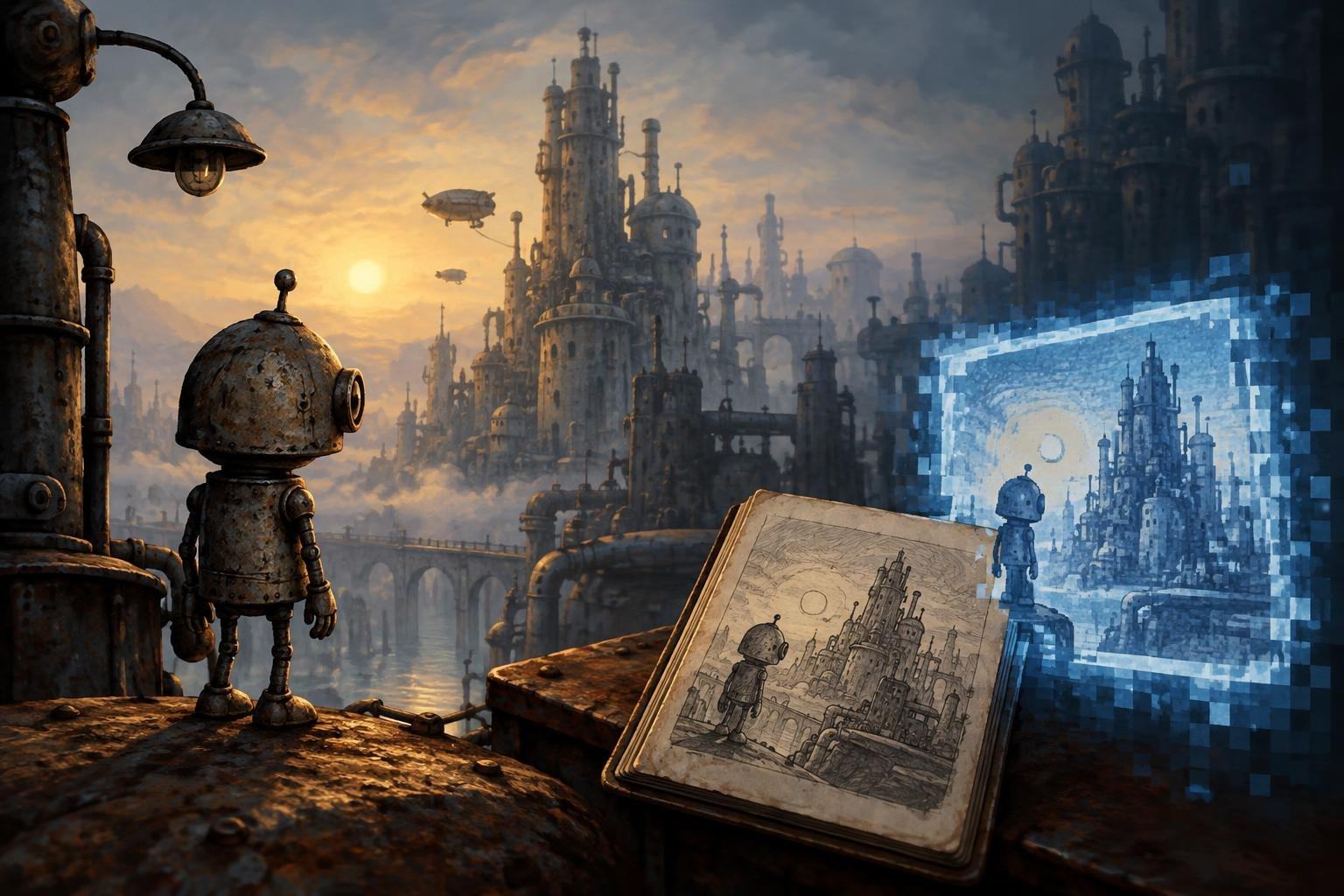
A robot can look like it belongs in Machinarium and still have nothing to do with what makes Machinarium feel like Machinarium. That distinction was at the heart of a sharp dispute this week, after an AI-generated tribute to Amanita Design’s 2009 adventure drew an unusually blunt response from the Czech studio.
The video was posted on October 20 by Sylvio Drouin, CEO of Nura Studios, a company that describes its work as AI storytelling. Amanita accused Nura of feeding Machinarium assets into AI to make the animation, rejecting the result as both offensive and unrelated to the studio’s craft. Drouin later apologised and said the posts had been deleted.
A recognisable style is not the same as a creative voice
Machinarium is an adventure game built around observation: players guide a small robot through a strange mechanical city, solving environmental puzzles in scenes that communicate largely through imagery rather than conventional dialogue. Its hand-drawn, rusted world is not simply a collection of eccentric robots and crooked pipes. The art, the puzzles and the game’s quiet sense of humour work together.
That matters because a tribute can copy the visible ingredients while missing the choices behind them. A machine with the right silhouette, a familiar palette or a cluttered industrial backdrop may trigger recognition, but recognition is not understanding. The game’s visual identity is inseparable from the way it invites players to look closely and make sense of its world.
AI-generated imagery makes that distinction especially visible. A system can produce an image that appears to echo a game’s style; that does not, by itself, show respect for the artists, permission to use their work, or an understanding of why those images belong together. The specific process behind Nura’s video is not detailed in the available account, so the studio’s allegation about the use of assets should remain an allegation—not a settled finding about how the video was made.
Why the studio chose not to let it pass quietly
Studios often have reason to ignore clumsy fan work: responding can give a minor post far more attention than it would otherwise receive. Amanita took the opposite route, publicly calling the video disgusting and saying it had nothing to do with the team’s craft. The language was severe, but it made the objection hard to mistake for a routine request to take something down.
Drouin’s apology acknowledged the mismatch in intent and impact: he said the team had thought the post was an homage and expressed regret. That does not resolve every question raised by the episode, and Amanita had not publicly accepted the apology at the time of the report. But the exchange illustrates a tension that is likely to recur as AI tools become more common in creative industries: calling something a tribute does not settle whether the people whose work it invokes welcome it.
There is also a difference between using a new tool within a creative process and presenting a machine-made imitation as affection for another studio’s work. The first conversation can involve authorship, disclosure and consent; the second can feel less like appreciation than a shortcut to borrowed recognition. Those are not identical debates, even if they are often bundled together.
A sequel gives the dispute an extra edge
The timing gives the exchange added resonance. Amanita announced Machinarium 2 earlier this month, putting the series’ distinct identity back in view just as someone else used it as the basis for an AI-made homage. The announcement is not evidence that the tribute affected the sequel, and no details about the new game are needed to see the contrast: one is the continuation of a world by the people who made it; the other was an outside attempt to evoke that world.
For players, the episode is a reminder that style is not merely a coat of paint waiting to be reproduced. In games, it shapes how spaces teach, how puzzles communicate and how a world earns its personality. A convincing tribute would need to understand more than what Machinarium looks like. It would need to understand why its images belong to the experience—and why, for Amanita, that work is worth defending.