
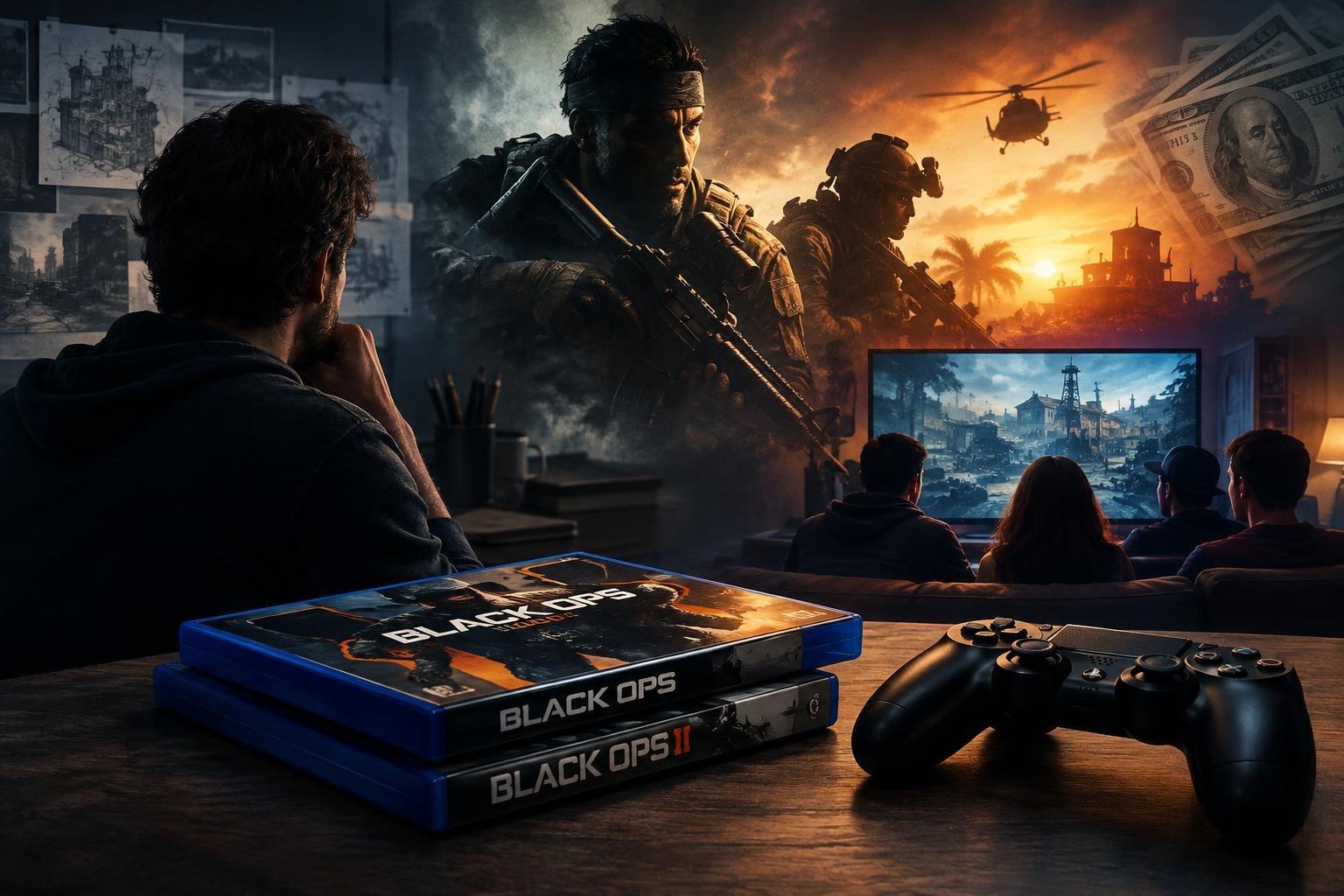
A game can be more than a decade old and still feel like a live business. The surprise PlayStation releases of Call of Duty: Black Ops and Black Ops 2 have found a large audience in 2026—but the comeback has also reopened a difficult question: when an old game keeps earning, should the people who made it share in that success?
Gavin Goslin, a former Treyarch level designer who worked on both games, says they should. In a LinkedIn post, he argued that the new versions add little beyond making the original games available again, yet have quickly attracted players and generated substantial sales. For Goslin, watching that happen is gratifying and frustrating at once.
A hit from the past, with a present-day price tag
Activision released the PS4 and PS5 ports on July 9 without a prior announcement. The games were sold as $40 digital re-releases, according to the source material, and Black Ops 2 topped Circana’s US sales chart for July 2026. An estimate from Alinea Analytics put combined sales at 11.2 million copies that month, with revenue of about $435 million.
Those figures are estimates, not a public sales report from Activision. Still, the scale helps explain why this is more than a small nostalgia bump. The ports also entered Circana’s top ten for weekly active users, suggesting that players did not simply buy familiar box art and move on. They were returning to the games themselves.
That distinction matters. A familiar shooter can offer something a new release cannot easily reproduce: a known pace, maps and rhythms, plus the chance to meet friends in a game everyone already understands. Activision marketing chief Tyler Bahl said the ports’ success exceeded the company’s expectations and pointed to demand for the old routine of playing together. He also framed the nostalgia as a possible path toward the new Modern Warfare 4.
The work behind a game’s long tail
Goslin’s objection is not that players should stop enjoying the games. He celebrated their continued popularity, while describing the original development period as demanding and marked by crunch. His point is that the people who made the work valuable should not disappear from the story once the original production ends.
That is a question games handle awkwardly. A successful release can generate value for years through re-releases and renewed attention, but the original development team may have moved on long before that revenue arrives. Goslin says the creators of these ports are not receiving royalties from the new sales. That is his account; the available information does not establish the terms of individual contracts or whether any other compensation was paid.
His argument also draws a useful line between preserving a game and rewarding its creators. Bringing older titles to current consoles can make them easier to access and keep a piece of gaming history playable. That benefit is real for players. But preservation does not, by itself, answer who deserves a share when an old game becomes a major commercial success again.
Nostalgia is not just a marketing asset
For publishers, the ports’ performance offers an obvious lesson: familiar games can still bring players together and attract spending. For players, it is a reminder that a game’s afterlife may be shaped as much by business decisions as by its original design. The same return that lets friends revisit a favourite can also spotlight the people whose labour made that return worthwhile.
There is no simple royalty formula in Goslin’s post, and one developer’s account cannot settle the wider debate over how studios should share legacy revenue. But the success of Black Ops and Black Ops 2 makes the question hard to dismiss. These games have outlived their original release windows; the people who built them should not have to become footnotes to that success.