
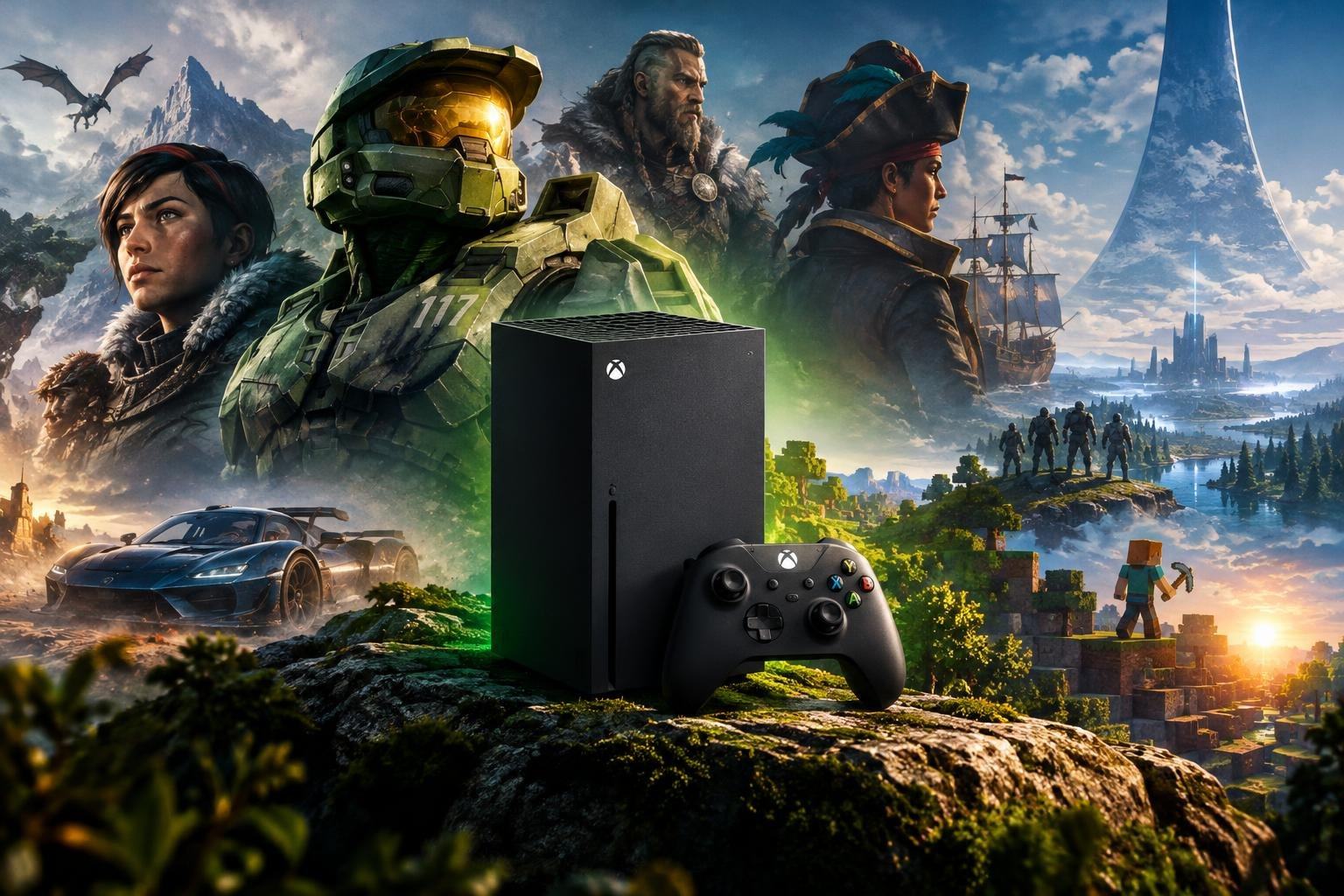
What would it cost to buy Xbox? A new report puts the answer somewhere between $100 billion and $150 billion—but that range was part of short-lived, exploratory discussions, not a price tag attached to a deal. No formal negotiations took place, and the firms involved have not been identified.
The distinction matters. A valuation floated while considering a possible transaction is not an offer, an agreed sale price or evidence that Microsoft was preparing to sell. Still, the reported interest gives a rare glimpse of how much value outside investors might see in the company’s gaming business—and how complicated it would be to prise that business away from its owner.
Xbox is more than a console business
Microsoft’s gaming division is a sprawling portfolio: the Xbox brand and hardware, games and subscriptions, and a collection of studios and publishing operations. That collection expanded dramatically with Microsoft’s acquisition of Activision Blizzard, which the company agreed to buy in 2022 for nearly $70 billion.
It is tempting to subtract that purchase price from the reported $100 billion-to-$150 billion range and conclude that “Xbox without Activision” must be worth $30 billion to $80 billion. But that arithmetic does not establish the value of either business. An acquisition price reflects a specific transaction at a specific time; it cannot simply be removed from a later, reported valuation of a larger division. The assets may be worth more or less under different ownership, and the report does not explain how its range was calculated.
That uncertainty is part of what makes the figure interesting. Xbox is not a standalone company with a public share price that offers an easy comparison. Its value could depend on how a buyer weighs long-running franchises, studios, player communities, recurring services and the reach of Microsoft’s wider technology business. The available reporting does not say which of those considerations drove the estimate.
A hypothetical sale would raise bigger questions
For players, a change in ownership would be about more than who signs the checks. A new owner could influence what games get funded, how studios are managed and whether Xbox’s services and releases continue to work across Microsoft’s existing ecosystem. Those are possibilities, not outcomes established by the report: the discussions were exploratory, and no transaction took shape.
Private equity is also not a single management philosophy. It would be a mistake to assume that any investment firm would automatically run Xbox well—or badly. The meaningful question is what a buyer would want from a business whose appeal depends partly on patient investment in games, hardware and services, rather than a quick change to its balance sheet.
The report arrives amid persistent speculation about Microsoft’s commitment to gaming. Windows Central says Xbox chief executive Asha Sharma recently pushed back on concerns that the business could shut down. That reassurance may matter to players, but it does not turn the reported exploratory conversations into a near-sale or settle every question about the division’s future.
The number is striking; the uncertainty is the story
Microsoft’s decision to keep Xbox within the company means players are not facing an ownership change prompted by these discussions. The more useful takeaway is that even a business with globally recognised hardware and game franchises can be difficult to value when its pieces are tightly connected to a much larger corporation.
A reported $150 billion ceiling makes for a startling headline. Yet the figure is not proof that Xbox was on the market, or that a buyer was ready to pay it. For now, the most revealing part of the story is the gap between imagining what Xbox might be worth on its own and actually separating it from Microsoft.