
A subscription can make choosing a game feel wonderfully easy: pay once, browse a library, and find something to play. But for Xbox, that same convenience raises a harder question: when does access to a game start replacing the sale of the game itself?
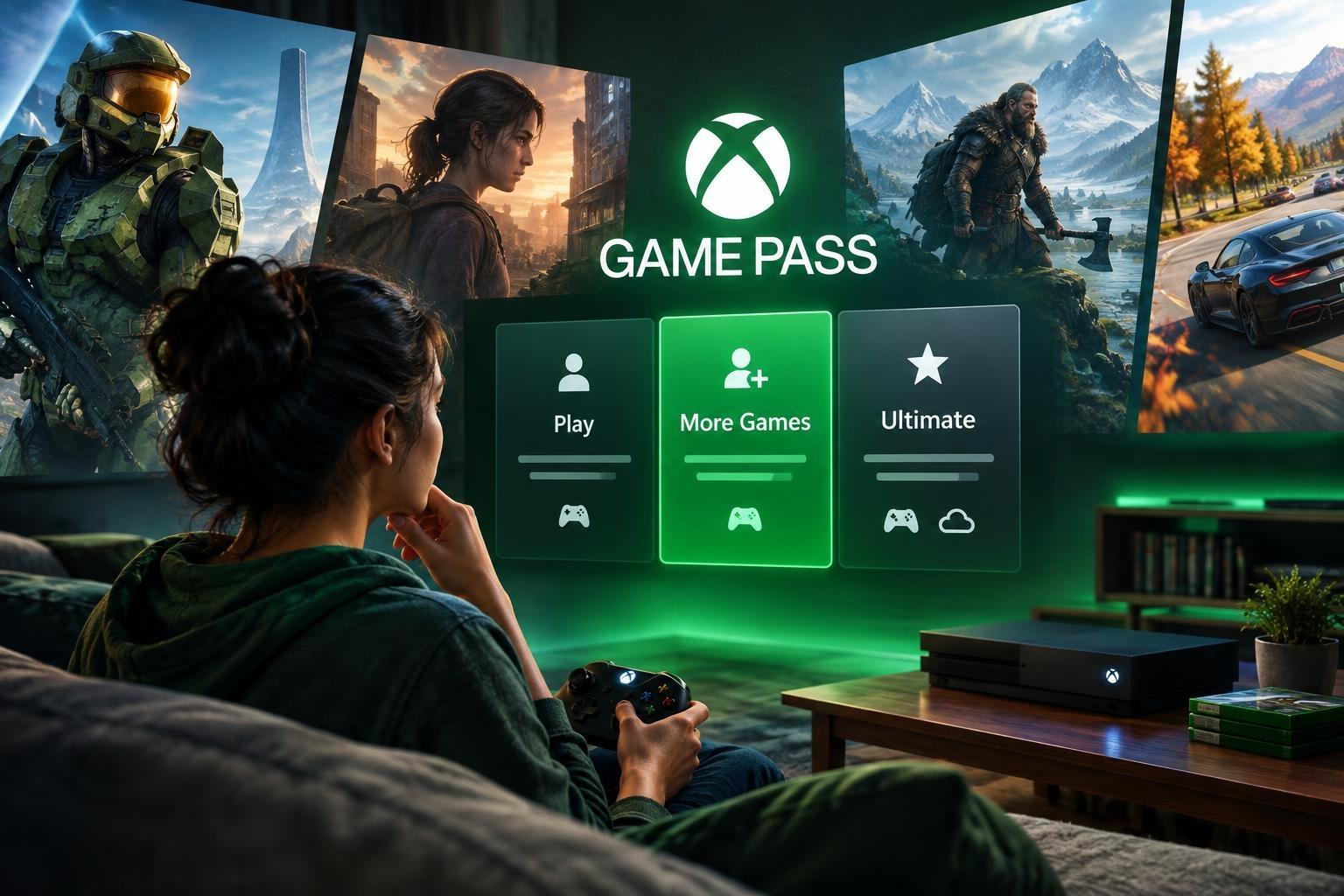
That tension sits behind a report that Xbox is considering more customizable Game Pass subscriptions. The idea has not been detailed publicly in the material available here: there are no confirmed tiers, prices, or feature combinations to assess. Still, the reported consideration is notable because it touches one of Xbox’s biggest strategic puzzles—how to make its subscription business work without weakening the value of its games.
The subscription bargain has two sides
Game Pass’s appeal is familiar to anyone who has used a streaming service: a monthly fee can open the door to a rotating catalogue rather than requiring a separate purchase for every title. For players, that can lower the risk of trying something unfamiliar. For a platform holder, it can encourage people to stay inside its ecosystem, even when they are not buying a new game that month.
But a subscription library and a traditional game sale do not always pull in the same direction. Fortune’s reporting describes concern among former Xbox employees that Game Pass may have cannibalized sales of some first-party games, particularly around launch. That is a concern, not proof that the service is damaging every release. A game included in a subscription can also reach players who might never have paid full price for it.
The difficult part is that those outcomes are hard to separate. A subscriber who discovers a series through the catalogue might later buy its next instalment; another might wait for a game to arrive in the service. For Xbox, the question is not simply whether Game Pass attracts subscribers, but whether its different ways of reaching players add up to a healthy business.
More choice could clarify the value—or cloud it
Customizable subscriptions might let players pay for a version of the service that better matches their habits. That is a broad possibility, not a description of any confirmed Xbox plan. Without details, it is impossible to know whether the reported consideration means distinct packages, optional add-ons, or something else entirely.
Any approach would face a familiar design challenge: choice is useful until it makes the offer harder to understand. A simple subscription promise is easy to explain; a menu of caveats can leave players wondering which games, benefits, or access they are actually paying for. The value would depend not just on flexibility, but on clear terms and a price that feels fair for each option.
That matters especially because Game Pass is only one part of a much larger Xbox business. Fortune describes a company under pressure to improve its finances and reconnect its strategy, with hardware, studios, publishing, and a vast game catalogue all in the mix. The report also notes that Xbox’s measured profit margin has been around 3%, while current-generation console sales trail PlayStation 5 sales by a substantial margin according to third-party estimates. Those pressures help explain why subscription design is more than a question of convenience.
The best tier is the one players understand
There is a useful lesson in the history of game subscriptions: access can change how people discover games, but it cannot make the underlying economics disappear. A catalogue needs a steady supply of appealing releases, and publishers still have to decide how subscriptions fit alongside individual purchases. The balance is particularly sensitive for expensive, high-profile games, whose launch windows can carry considerable commercial weight.
More customizable Game Pass options could, in principle, give Xbox a way to serve different kinds of players without asking every subscriber to pay for the same package. They could also create a confusing maze or make the service feel less generous. Until Xbox explains what it is considering, those are possibilities—not promises.
The most revealing test will be whether a new structure makes the choice clearer for players while giving developers and publishers a sustainable way to reach them. Game Pass began with the appeal of opening a library with one decision. If Xbox changes that bargain, it will need to show that adding choices does not make the simple part disappear.