
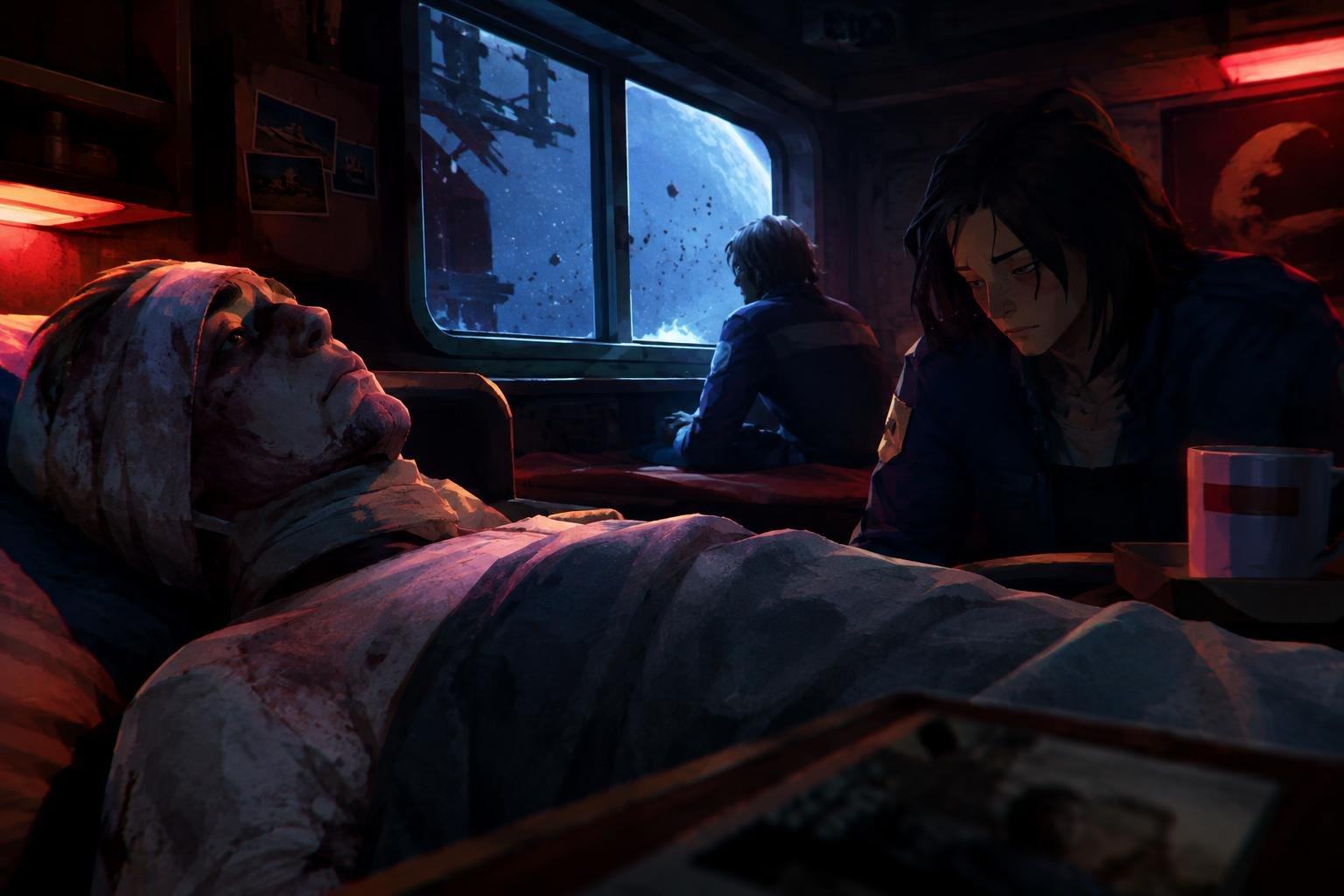
In most space-horror stories, the threat is something outside the crew: a creature in the vents, a signal from the dark, or a ship that has stopped obeying its passengers. Mouthwashing turns the danger inward. Its captain has wrecked the freighter and left the crew facing starvation and isolation; he survives, maimed and unable to speak, in the care of the people he doomed.
That uncomfortable reversal is at the heart of the game, and now more players will be able to experience it. Publisher CRITICAL REFLEX and developer Wrong Organ will bring the first-person horror game to PlayStation 5, Xbox Series X|S, PlayStation 4 and Nintendo Switch on October 29. It will also arrive on PC through the Microsoft Store. Physical editions for PS5 and Switch are planned through Fangamer.
A survival story with no clean rescue
Mouthwashing first launched on Steam for PC on September 26, 2024. Its premise is deliberately stark: the ship is expected to lose power within six months, while its food supplies will run out sooner. Rescue is not presented as a reliable escape hatch. The crew’s remaining time is a pressure that shapes the story—and the increasingly fraught relationships among the people trapped together.
The detail that makes the setup linger is Curly’s condition. He cannot speak or move freely, yet remains present as a living consequence of his decision. That turns care into a moral complication: the crew must contend not only with what he did, but with what they owe someone who can no longer answer for himself. It is a sharper premise than simply asking who will survive a monster.
This is a familiar horror setting—an isolated vessel, dwindling resources, no easy way out—but the emphasis shifts from escaping a threat to enduring one another. In that respect, the freighter is more than a backdrop. Every day of scarcity makes the crew’s dependence harder to avoid, and every interaction can carry the weight of a choice made under pressure.
When the environment becomes part of the story
The game’s description urges players to pay attention to their surroundings and warns that their eyes may lie. Those clues point towards horror built around perception and interpretation, rather than relying only on a visible attacker. Looking carefully becomes part of reading the story. The space around the crew may unsettle the player, but it can also shape what they believe about the people inside it.
That approach belongs to a long tradition of psychological horror, where uncertainty can be more disturbing than a clearly explained threat. It also suits a first-person perspective: the player encounters the ship at close range, rather than watching the crisis from a safe distance. The announcement does not detail how the console versions handle controls or performance, so there is no basis yet for comparing them technically with the original PC release.
A wider audience for a deliberately bleak voyage
The console launch gives the game a new route to players, while the Microsoft Store release adds another PC storefront. The physical PS5 and Switch editions offer a different kind of appeal: a tangible copy of a game whose story is about being stuck with the consequences of a disaster. No price or additional platform-specific features were included in the announcement.
For players who have already experienced the game on Steam, the news is mainly about access and format. For newcomers, the premise offers a useful warning about what kind of horror awaits: not a power fantasy about beating the odds, but a close, uneasy study of a crew running out of food, time and patience.
On October 29, the freighter’s doors open to console players. The grim question waiting inside is not simply whether anyone can survive. It is what survival means when the person responsible is still there—and cannot even tell you what he thinks.