
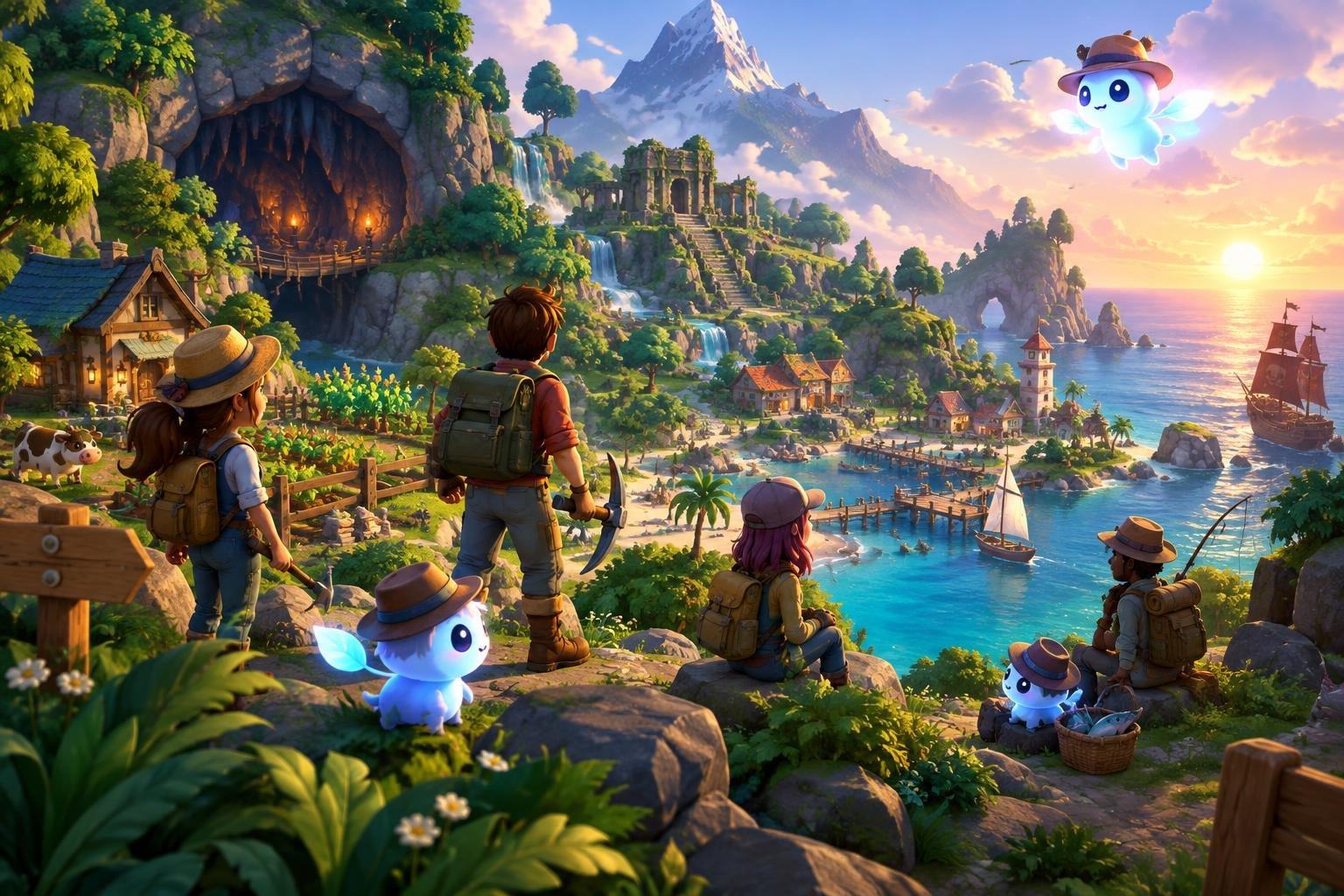
A cave full of traps is easier to tackle when nobody has to stop and sort through a packed bag—or wait for a stamina meter to refill. That friction-free approach is central to Luma Island, and it will get a new test when the farming adventure arrives on PlayStation 5 and Xbox Series on December 2.
Developer Feel Free Games says the console release will add cross-platform multiplayer for groups of up to four across PS5, Xbox Series X|S and PC. The game costs $19.99 on consoles. It first launched on Steam for PC on November 20, 2025, so this is a chance for its existing audience to bring new players into the same island adventure.
A cosy game that wants you to leave the farm
Farming, fishing and building are part of the pitch, but the island is not meant to be experienced entirely from a tidy patch of land. Players can head into forests and mountains, descend into caves and explore ancient temples where environmental puzzles, traps and hidden treasure give the game a more adventurous shape. Pirate Cove adds another destination to that mix.
That contrast matters. Farming games often build their rhythm around returning home, managing resources and preparing for the next day. Luma Island instead describes an experience that pairs homesteading with sustained exploration—and removes two familiar sources of friction along the way: there are no stamina meters or inventory restrictions. Players can farm, mine, fish and build without those limits interrupting the activity.
Those omissions do not automatically make every task effortless; puzzles, hazards and combat can still provide challenge. But they shift the pressure away from routine resource management. For players who enjoy the pleasures of a life sim but find constant energy checks or inventory shuffling tedious, that is a meaningful design choice, not just a convenience setting.
Cross-play changes who can share the island
Four-player co-op is familiar territory for cosy adventures. The more useful detail here is that players on PlayStation, Xbox and PC can join the same group from the console launch onward. Friends do not have to own the same kind of system to farm, craft and explore together, and the entire journey can also be played solo.
That makes the island’s varied activities a natural fit for a party. One player might be drawn to fishing or cooking, while another wants to search a temple or gather materials. The game also offers professions—including Archaeologist, Blacksmith, Brewer, Jeweler, Shipwright and Treasure Hunter—that bring their own recipes, resources and tools. The announcement does not spell out how those specializations interact in a group, but the range suggests several ways to approach the same expedition.
Importantly, cross-platform play is not the same thing as cross-progression. The announcement confirms that players on the three platforms can play together; it does not say that saves or progress carry between systems. Anyone hoping to move a character from PC to console should not assume that feature is included.
Comfortable does not have to mean consequence-free
Luma Island offers three modes: Cozy, with peaceful exploration and optional combat; Adventure, intended as a balance of action and discovery; and Hero, aimed at players seeking a tougher challenge. That spread acknowledges a familiar tension in the genre: some people want a low-pressure place to build and explore, while others want the world to push back.
Magical Lumas, hatched from eggs found around the island, offer another reason to venture out. These companions assist on journeys and help locate hidden riches, tying discovery to a reward that can keep exploration feeling personal. Together with the profession system, they give the game more to offer than a farm that simply grows larger.
The console arrival is therefore more than an extra set of platforms. It extends a PC game whose central promise is that players can choose their pace—and now, more easily choose their company. When the island opens to all three platforms on December 2, the best expedition may be the one where nobody has to pause at the edge of the map to compare hardware.