
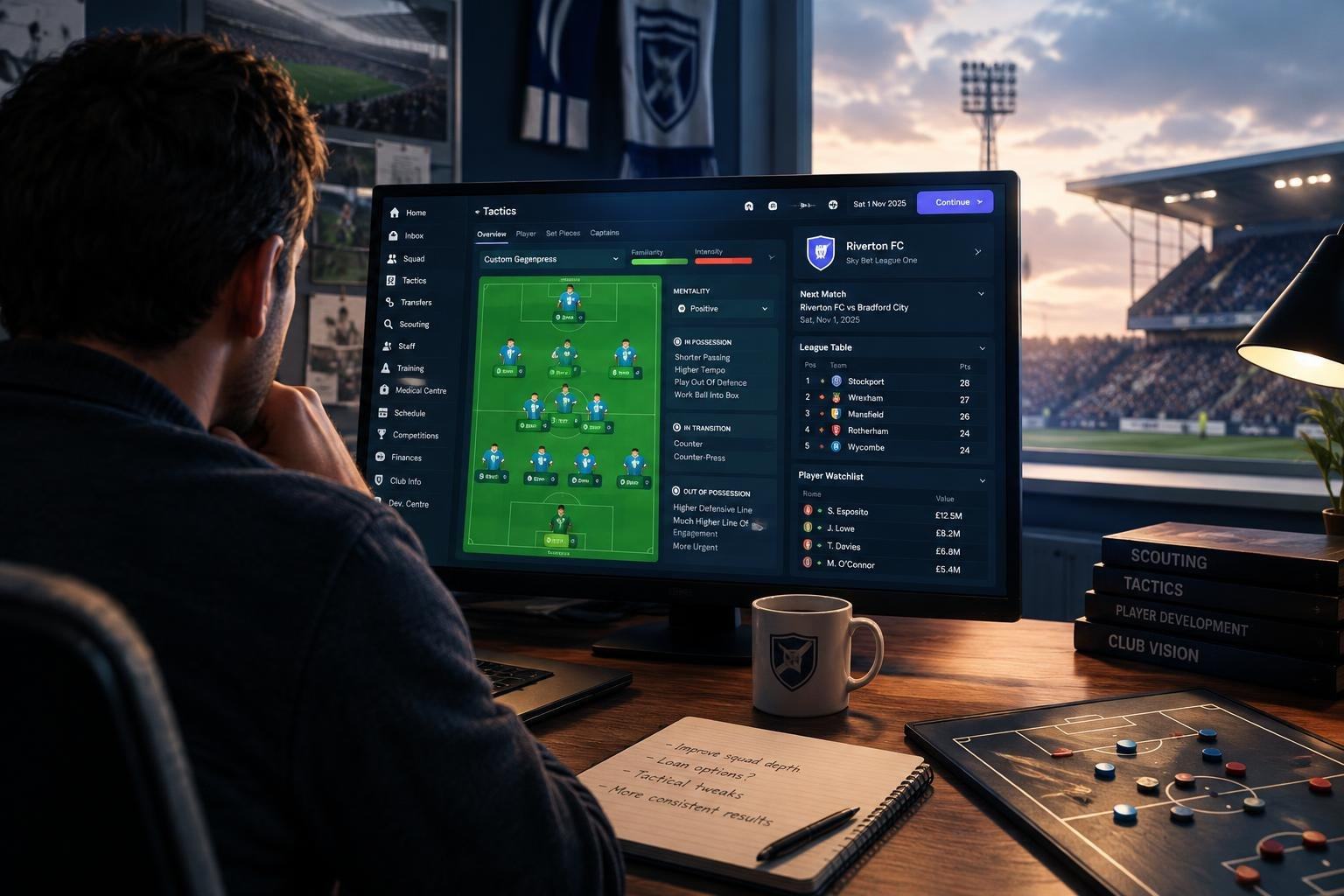
In Football Manager, a bad first impression can last longer than a losing streak. A clumsy interface or a missing tool does not just spoil one match; it can disrupt the quiet rituals of a season spent scouting, tweaking tactics and trying to turn a struggling club around. That makes Football Manager 27’s unusual offer more than a promotional freebie: it lets players test the game’s feel before deciding whether to trust it again.
Sega and Sports Interactive will make FM27’s Launch Preview free to play on PC and Mac from October 29 to November 3. It will be available through Steam, Epic, the Microsoft Store, Xbox Game Pass and PC Game Pass, with no sign-up required. The preview includes all game modes, and progress carries over if players buy the full game.
A trial that puts the whole management loop on display
That “all game modes” detail matters. Football Manager’s appeal is not confined to watching a team play: the match is one part of a long chain of decisions about tactics, recruitment and the day-to-day running of a club. A short trial limited to a showcase mode could reveal little about how those systems fit together. Five days with the complete preview gives players a chance to see whether the broader routine holds their attention.
It is still a limited window, not a promise that the full game is free. Football Manager 27’s official launch is November 10. Players who buy it during the preview period receive a 10% discount and can continue playing until launch; those who start a save during the free period can carry that progress forward.
For a management game, that continuity is particularly useful. Players can begin building a season rather than treating the trial as a disposable demonstration, and they do not have to choose between experimenting now and starting fresh later. The offer lowers the cost of trying FM27, while preserving the investment of time that makes this kind of game compelling.
The series has more to repair than a match engine
The timing reflects a difficult stretch for the franchise. After taking a year off in 2024, the series returned in 2025 with a Unity-powered revamp that drew heavy criticism over bugs and missing features. Sports Interactive later released fixes and updates, but acknowledged that the game had missed expectations. Its Steam user rating, which once fell below 25%, is currently 38% and “mostly negative,” according to the supplied figures.
A new engine or a visual overhaul can make a familiar series feel fresh, but it also raises expectations: players want the new presentation without losing the clarity and dependable habits that made the old version work. In a game built around menus, information and repeated decisions, the interface is not mere decoration. If it slows down the work of understanding a squad or acting on a tactical idea, that friction can undermine the fantasy of being in control.
FM27 is set to bring an improved interface, enhanced match-day visuals, the return of various features and what the developer describes as more familiar behaviours. Its named additions include Tactical Tweaks, Tactical Effectiveness and Continue Flow customization. Those labels suggest attention to both on-pitch planning and the pace of moving through a season, but the announcement alone does not establish how well the systems work. The preview is where players can begin to find out.
Five days can answer a practical question
A free launch period cannot prove that the full release will be polished, nor can it erase frustration with the previous game. What it can do is let players judge the essentials for themselves: whether the interface feels easier to live in, whether tactical changes are understandable, and whether the familiar rhythms of a long save are back.
That makes this a meaningful test for both sides. Players get room to be cautious without abandoning the series; the studio gets a chance to demonstrate improvement through play rather than promises alone. Football Manager has always asked supporters to think several seasons ahead. This time, the first decision is simpler: spend five days seeing whether the next season feels worth starting.